
What Happens to Australian Businesses if War Breaks Out?
When Supply Lines Break: Australian Commercial Law in an Era of Geopolitical Disruption
Summary
What happens legally if war breaks out and Australian supply chains break down? From force majeure and sanctions to insurance, employment law and directors’ duties, this article examines the key areas of Australian commercial law engaged when geopolitical conflict disrupts trade.
Key Takeaways
- Force majeure is not implied under Australian law - it must be expressly included in the contract with specific trigger events such as war, sanctions or shipping disruption.
- Standard business interruption insurance typically excludes war-related losses; marine and aviation war risk cover can be cancelled on just 7 days' notice.
- The Fair Work Act allows employee stand-downs without pay during supply chain stoppages, but the threshold is strict and COVID-era case law limits its application.
- Directors have a duty of care under s 180 to understand and monitor geopolitical risk exposure, including supply chain dependencies and sanctions compliance.
- Australia imports over 90% of its refined fuel with only 34-36 days' reserves, and the Liquid Fuel Emergency Act 1984 gives the government broad rationing powers during a declared emergency.
- 1.Force Majeure: The First Port of Call (But Not a Given)
- 2.Frustration of Contract: The Common Law Backstop
- 3.Duties of Care During Disruption: The Ruby Princess Precedent
- 4.Insurance: War Exclusions, Marine Risk and Business Interruption
- 5.Fuel Security and Emergency Powers
- 6.Employment Law: Stand-Downs, Redundancy and the COVID Playbook
- 7.Corporate Governance and Directors’ Duties
- 8.Competition Law and Consumer Protection
- 9.International Trade Law
- 10.Aviation and Air Freight: When Airspace Closes
- 11.Practical Takeaways
- 12.Conclusion
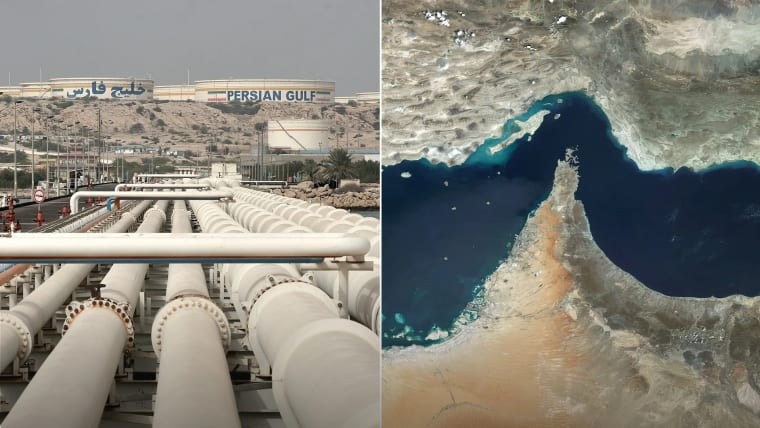
Australia’s economy is deeply integrated into global supply chains. We import over 90% of our refined fuel. Our commodity exports traverse some of the world’s most strategically sensitive shipping lanes. Our businesses trade in US dollars, use US-correspondent banking and hold insurance policies underwritten in London. When geopolitical tension escalates - whether it’s the Russia-Ukraine conflict, Red Sea shipping disruptions or tensions in the Strait of Hormuz - the legal consequences for Australian businesses are real, immediate and span well beyond the obvious.
The COVID-19 pandemic gave Australian lawyers and businesses a crash course in force majeure, frustration, stand-down provisions and business interruption insurance. A major geopolitical disruption would activate many of the same legal frameworks, but with a different - and in some ways more complex - set of facts.
This article examines the key areas of Australian law that are engaged when conflict disrupts trade and what businesses and advisers should be considering now.
Concerned about supply chain risk or geopolitical exposure? Astris Law advises on force majeure, contract risk, business compliance and corporate governance. Call +61 7 4270 8880.
1. Force Majeure: The First Port of Call (But Not a Given)
Force majeure is a French term meaning “superior force”. It refers to unforeseeable, uncontrollable events - such as natural disasters, wars, pandemics, sanctions or trade embargoes - that prevent parties from fulfilling their contractual obligations. In commercial contracts, a force majeure clause acts as a legal mechanism allowing for the suspension or termination of contractual obligations without liability when such an extraordinary event occurs. It is one of the first provisions lawyers turn to when supply chains break down.
It Must Be in the Contract
The starting point under Australian law is that force majeure is not an implied term. It is a creature of contract, not common law. If your contract doesn’t contain a force majeure clause, you don’t have one. Australian courts have been consistently clear on this point.
This is a critical distinction from civil law jurisdictions (such as France, where force majeure is codified). In Australia, the clause must be expressly included and specifically drafted.
What the Clause Actually Needs to Say
Not all force majeure clauses are created equal. The relief available depends entirely on the wording agreed by the parties. Courts will interpret the clause strictly and will not imply coverage for events not contemplated in the drafting.
Key considerations include:
- Trigger events: Does the clause specifically list “war,” “armed conflict,” “sanctions,” “government action,” “trade embargo” or “shipping disruption”? Vague references to “acts of God” may be insufficient. As the courts have noted, specificity is critical - listing “cyclone” or “government-imposed sanctions” is far more defensible than relying on catch-all language.
- Causation standard: The force majeure event must be the proximate or most substantial cause of non-performance. A party cannot invoke force majeure if its own acts or omissions contributed to the failure. Importantly, the event must create a legal or physical restraint on performance - purely economic hardship (e.g. increased costs, reduced margins) is not enough.
- Mitigation obligations: Most well-drafted clauses require the affected party to take reasonable steps to mitigate the impact, including sourcing alternative supply. In South32 Aluminium (RAA) Pty Ltd v Alinta Sales Pty Ltd [2015] WASC 450, the Supreme Court of Western Australia held that the seller could not rely on force majeure because it failed to demonstrate that alternative supply sources had been explored.
- Notice requirements: Strict compliance with contractual notice provisions is typically required. Failure to provide timely notice may defeat the claim entirely.
- Effect on the contract: Force majeure clauses generally provide for staged relief - suspension of performance for the duration of the event, possible extension of time and termination only if the event is prolonged. This is more nuanced than the all-or-nothing effect of frustration.
The Landmark Case: Alumina and Bauxite Company v QAL [2024] FCA 43
The most directly relevant recent Australian authority is the Federal Court’s 2024 decision in the dispute between Rusal (the Russian aluminium company) and Rio Tinto’s Queensland Alumina joint venture.
Following Australia’s imposition of sanctions on Russia under the Autonomous Sanctions Regulations 2011 (Cth), QAL and Rio Tinto ceased supplying alumina to Rusal’s subsidiary. The Federal Court upheld this decision on two grounds:
- Supervening illegality: performance would have breached Australian sanctions law.
- Force majeure: the sanctions constituted a force majeure event under the relevant contractual provisions.
The Full Federal Court dismissed Rusal’s appeal in November 2024, confirming that contractual force majeure clauses that explicitly contemplated sanctions-driven disruption provided effective protection. This case is the leading Australian authority on the intersection of sanctions, force majeure and joint venture obligations.
COVID-Era Lessons: Acciona v Kwinana [2022] WASC 380
The Western Australian Supreme Court made clear that simply labelling COVID-19 as a “force majeure event” was insufficient. The court required the claimant to demonstrate specifically how the pandemic prevented performance of the particular contractual obligations at issue. A generic declaration that a pandemic is force majeure, without connecting it to specific contractual consequences, will not succeed.
2. Frustration of Contract: The Common Law Backstop
Where no force majeure clause exists, the common law doctrine of frustration may apply - but the threshold is significantly higher.
The Test
Under Australian law, frustration occurs when a supervening event:
- is not the fault of either party;
- fundamentally transforms the nature of the contractual obligations; and
- makes it unjust to hold the parties to the contract.
The High Court authority comes from Codelfa Construction Pty Ltd v State Rail Authority (NSW) (1982) 56 ALJR 459, where Mason J articulated the test as whether the situation resulting from the event is “fundamentally different” from what was contemplated by the contract.
Key Limitations
- Higher threshold: Frustration requires more than inconvenience, increased expense or reduced profitability. The contract must become impossible or radically different in nature.
- Automatic termination: Unlike force majeure (which typically suspends performance), frustration terminates the contract entirely. Parties generally bear their own losses, although state legislation in NSW, Victoria and South Australia modifies this to allow courts to adjust the parties’ positions.
- Ousted by force majeure clauses: If the contract contains a comprehensive force majeure regime, this may demonstrate that the parties turned their minds to the risk of disruption and allocated it contractually - potentially ousting the doctrine of frustration.
- Temporary disruptions unlikely to qualify: Frustration is unlikely to apply to temporary supply chain disruptions or shipping delays, even if they are severe. The doctrine applies to events that permanently or fundamentally alter the obligation.
The COVID Class Actions: Frustration in Practice
The most significant live test of the frustration doctrine in an Australian disruption context is the aviation class actions currently before the Federal Court.
Jetstar, in Perkins v Jetstar Airways Pty Limited (VID816/2024), faces a class action estimated at over $100 million, brought by Echo Law on behalf of hundreds of thousands of passengers whose flights were cancelled during COVID-19. The core allegation is that COVID travel restrictions frustrated Jetstar’s contracts of carriage, automatically entitling passengers to cash refunds under common law. The applicants also allege that Jetstar’s practice of issuing travel credits instead of refunds constituted misleading or deceptive conduct and unconscionable conduct under the Australian Consumer Law (see Section 8 below for the consumer protection dimensions).
Qantas faces a parallel class action, Haverkort v Qantas Airways Limited [2025] FCA 1147, seeking approximately $400 million in refunds, interest and consequential losses on substantially identical grounds.
These cases are directly relevant to geopolitical disruption. The legal theories being tested - frustration of contract, ACL misleading conduct, unconscionable conduct - are precisely the theories that would apply to mass cancellations driven by conflict-related airspace closures. With over $500 million in combined frustration claims, COVID litigation is effectively writing the legal playbook for geopolitical disruption claims.
Practical Implication
For contracts without express force majeure provisions, frustration remains a theoretical option but a difficult one to establish. The COVID class actions demonstrate that claimants are willing to pursue it at scale when the facts support it. The real lesson is to ensure that your contracts are properly drafted before the disruption occurs.
3. Duties of Care During Disruption: The Ruby Princess Precedent
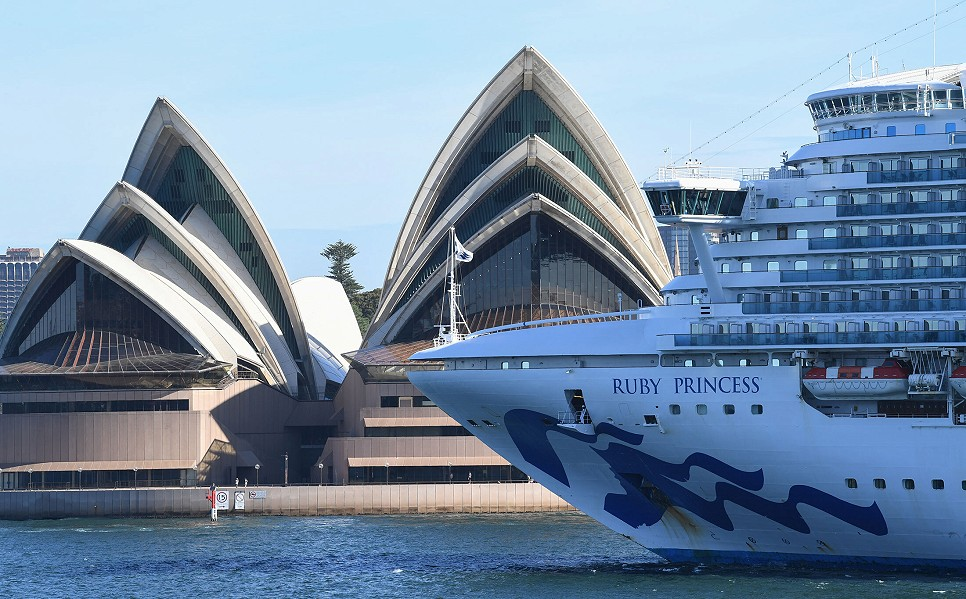
When disruption creates heightened risk, service providers owe duties of care that are measured against the circumstances as they exist at the time - not as they existed when the contract was signed. The COVID-19 pandemic produced a landmark Australian case on exactly this point.
In Karpik v Carnival PLC (The Ruby Princess) [2023] FCA 1280, the Federal Court awarded damages to a plaintiff in a class action arising from a COVID-19 outbreak on the Ruby Princess cruise ship. The proceedings concerned a 13-day cruise that departed from Sydney at the outbreak of the pandemic in early 2020. There were 2,671 passengers on board with 1,146 crew. The outbreak led to more than 600 infections and a number of deaths.
The class action claimed the cruise was, under the Australian Consumer Law, not fit for the purpose of providing a "safe, relaxing and pleasurable cruise". The Court held that given the heightened risk of contracting COVID-19 on the cruise compared to in the community generally, it was doubtful that it was possible to provide a fit-for-purpose cruise at the time the ship left Sydney.
The Court also upheld a negligence claim and a related consumer law claim that Carnival had failed to render the cruise with "due care and skill". The Court held that before the cruise departed, Carnival knew or ought to have known of the heightened risk of infection on the cruise, and the procedures in place were unlikely to screen out infectious staff and passengers.
Carnival had already refunded the cost of cruise tickets to passengers. Ms Karpik had a mild COVID infection on the cruise which did not exceed the whole person impairment threshold. She was awarded her out-of-pocket medical expenses and $4,400 in damages for distress and disappointment, which could be set off against the refund. The decision paved the way for the balance of class members to resolve their claims with Carnival.
Practical Implication
The Ruby Princess decision establishes that when circumstances change - whether through pandemic, conflict or other disruption - the duty of care owed by service providers is assessed against the risk environment as it actually exists. Businesses that continue to operate during a crisis without adapting their procedures to the heightened risk environment may face both negligence and consumer law claims. In a geopolitical disruption scenario, this principle would apply across sectors: transport operators, logistics providers, event organisers and any business providing services in or through a conflict-affected area.
4. Insurance: War Exclusions, Marine Risk and Business Interruption
War Exclusion Clauses
Most Australian commercial insurance policies - property, business interruption and general liability - contain war exclusion clauses. These exclude cover for loss or damage arising from war, invasion, armed conflict or military action between sovereign or quasi-sovereign entities.
Key issues:
- Definition of “war”: Courts have historically determined the existence of “war” as a matter of common sense, not international law. A formal declaration of war is not required (as illustrated by the Falklands and Gulf conflicts).
- “Directly or indirectly” language: Many war exclusions use the phrase “directly or indirectly,” which significantly broadens the scope of the exclusion. A supply chain disruption caused indirectly by conflict overseas - such as a fuel shortage caused by shipping lane closures - could potentially be caught by such wording.
- Geographic nexus: An insured may argue that “war” in the exclusion was intended to refer to war occurring in the vicinity of the insured property, not a conflict in a distant region. This argument has some conceptual force but will depend on the specific policy wording.
- Unfair contract terms: Since 2021, insurance contracts for consumers have been subject to the unfair contract terms regime under the ASIC Act. Whether a broadly worded war exclusion could be challenged as “unfair” remains an open and evolving question.
Marine Insurance: A Different Regime
The Marine Insurance Act 1909 (Cth) governs marine insurance in Australia and is substantively based on the UK’s Marine Insurance Act 1906. Critically, the Insurance Contracts Act 1984 (Cth) does not apply to marine insurance - it operates under its own regime.
War risk in marine insurance has traditionally been handled through separate war risk policies appended to the standard hull and cargo cover, typically the Institute War and Strikes Clauses. These are distinct from the underlying marine policy and are subject to the 7-day cancellation provisions discussed below.
The real-world impact was demonstrated in early March 2026, when leading P&I Clubs (including Gard, Skuld, NorthStandard and London P&I) cancelled war risk coverage for Iranian waters, the Gulf and the Strait of Hormuz. Hapag-Lloyd imposed war risk surcharges of US$1,500 per TEU. Hull war risk premiums for Strait of Hormuz transits rose from approximately 0.125% to 0.2% of vessel value, translating to an additional US$75,000 per US$100 million ship for a single passage.
Business Interruption Insurance
The COVID-19 business interruption test cases provided important Australian precedent:
- First Test Case (2020-2021): In HDI Global Specialty SE v Wonkana No. 3 Pty Ltd [2020] NSWCA 296, the NSW Court of Appeal ruled unanimously in favour of policyholders, finding that insurers could not rely on references to the repealed Quarantine Act to deny pandemic-related claims. The High Court refused the ICA’s application for special leave to appeal on 25 June 2021.
- Second Test Case: In LCA Marrickville Pty Limited v Swiss Re International SE [2022] FCAFC 17, the Full Federal Court (Moshinsky, Derrington, Colvin JJ) substantially upheld the first-instance decision, finding against policyholders in most cases. The case involved nine policyholders (gyms, cafes, restaurants, travel agencies). The Full Court held that “prevention of access”, “hybrid” and “catastrophe” clauses were unlikely to cover COVID-19 losses, but “disease” clauses might depending on the business and cause of loss. The High Court refused all three applications for special leave on 14 October 2022, making the Full Court judgment the leading authority. See also the companion case, Star Entertainment Group Limited v Chubb Insurance Australia Ltd [2022] FCAFC 16.
For geopolitical disruptions, the key question is whether business interruption policies cover losses caused by supply chain disruptions originating overseas. Standard BI policies typically require a direct causal link between the insured event and the business interruption. Indirect supply chain effects - such as a fuel shortage caused by a distant conflict disrupting shipping - may fall outside standard BI coverage unless the policy specifically includes contingent business interruption (CBI) extensions.
Trade Disruption Insurance (TDI) is an emerging product designed to fill this gap, covering losses arising from political risks, sanctions and supply chain disruptions.
War Risk Insurance: The 7-Day Kill Switch
War risk is treated separately across the insurance market. In marine insurance, war risk is appended to hull and cargo cover through the Institute War and Strikes Clauses. In aviation, airlines carry separate war risk policies covering losses from war, terrorism and hijacking. In both cases, a critical feature is the 7-day cancellation clause - insurers can withdraw cover on just 7 days’ notice when a conflict makes the risk unacceptable.
For shipping, this means war risk cover can be (and has been) cancelled at short notice, leaving shipowners and cargo interests scrambling to obtain replacement cover at vastly increased premiums. For airlines, once war risk cover is cancelled, the airline cannot fly that route. Aircraft lease and loan agreements, and most foreign governments, require war risk cover as a condition of operations.
After MH17 was shot down over eastern Ukraine in 2014, killing 27 Australian citizens and residents, war risk premiums tripled. Insurers now require airlines to provide documented evidence of dynamic route-risk evaluation for each flight traversing regions with military engagement history. The insurance market’s post-MH17 posture creates a powerful economic incentive for carriers to avoid conflict zones entirely rather than risk unlimited liability.
Australia, notably, does not have a government-backed war risk insurance program for airlines (unlike the US, where the FAA can issue temporary war risk policies when commercial cover is withdrawn). Australian carriers are entirely dependent on the commercial insurance market.
Travel Insurance: The Gap
Standard Australian travel insurance policies explicitly exclude all claims arising from war, acts of war, rebellion, revolution or military conflict, whether formally declared or not. The Insurance Council of Australia has confirmed that these exclusions are market-wide: “the scale and unpredictability of armed conflict create risks that are difficult for insurers to price”.
Key implications for Australian travellers:
- The exclusion applies regardless of when the policy was purchased - even if you bought cover well before hostilities erupted.
- When DFAT issues a Level 4 “Do Not Travel” advisory, insurers cannot provide cover for claims related to that destination. Stopovers count.
- Medical cover generally survives even when disruption claims are excluded.
- Consumer advocates advise: do not cancel flights yourself - let the airline cancel to preserve your rights under the conditions of carriage and the ACL.
Proximate Cause
Where there are multiple contributing causes of a loss - some covered, some excluded - Australian insurance law applies the proximate cause doctrine. The question is what was the “dominant” or “effective” cause of the loss. Where a supply chain disruption has both commercial causes (e.g. supplier insolvency) and geopolitical causes (e.g. shipping lane closure), the analysis of which cause is “proximate” becomes highly fact-dependent and is likely to be contested.
5. Fuel Security and Emergency Powers
Australia’s Vulnerability
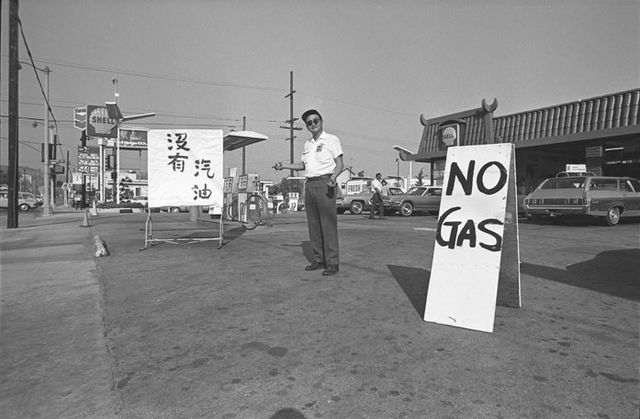
Australia imports more than 90% of its refined fuel products. National reserves sit at approximately 34-36 days’ supply - well below the International Energy Agency’s benchmark of 90 days. Much of Australia’s imported fuel comes through Asian refineries that source crude oil from the Middle East, creating a direct exposure to Strait of Hormuz disruptions.
The Legal Framework
The Liquid Fuel Emergency Act 1984 (Cth) provides the emergency powers framework:
- The Governor-General may declare a national liquid fuel emergency on the Minister’s recommendation.
- The Minister must be satisfied of a national shortage (or likely shortage) and must consult State and Territory Energy Ministers.
- Once declared, the Minister has powers to direct fuel rationing for up to three months, designate essential users with priority access and direct fuel companies regarding supply and distribution.
The National Oil Supplies Emergency Committee (NOSEC) provides advisory support but notably has no formal legislative basis.
IEA Obligations and the December 2025 Amendment
Australia is a member of the International Energy Agency and is bound by the Agreement on an International Energy Program, which requires member countries to hold stocks equivalent to 90 IEA days. Australia has been non-compliant with this obligation since 2012, although the Fuel Security Act 2021 established a framework for minimum stockholding obligations.
In December 2025, Parliament passed the Treasury Laws Amendment (Delivering Better Financial Outcomes and Other Measures) Act 2025, which amended the Fuel Security Act 2021 to insert a new section 16A - a temporary reduction power. This allows the Minister, by legislative instrument, to reduce the quantity of stocks an entity must hold under its minimum stockholding obligation where the Minister is satisfied the reduction is necessary to meet Australia’s IEA obligations or to prevent or alleviate a disruption (or likely disruption) to supply.
Key features of the new power:
- Reductions must not be greater, or apply to more obligation days, than is reasonably necessary to meet IEA obligations or address the disruption.
- Each reduction period must not exceed 6 months, although the Minister may make reductions for additional 6-month periods.
- Before making a reduction, the Minister must inform the Energy Ministers (within the meaning of the Liquid Fuel Emergency Act 1984) and must consider making a reduction if requested by one of those Ministers.
- Where a section 16A reduction overlaps with a temporary reduction under section 18, the greater reduction applies.
The practical effect is that the government now has a more flexible tool to respond to supply disruptions before a full emergency declaration is required - allowing it to temporarily release stockholding obligations to increase available supply in the market.
Practical Implication
If a conflict disrupts Middle East oil supply, the legal consequences for Australian businesses extend beyond contractual disputes:
- Fuel rationing could directly affect business operations.
- Priority allocation to “essential users” means some businesses will receive fuel and others will not.
- The government has broad discretionary powers during a declared emergency.
- Contracts for fuel supply may be overridden by ministerial direction.
- The new section 16A power means the government can now also temporarily reduce minimum stockholding obligations to increase available supply, even without declaring a full emergency.
6. Employment Law: Stand-Downs, Redundancy and the COVID Playbook
Stand-Down Provisions (Section 524, Fair Work Act 2009)
If supply chain disruptions prevent a business from operating, the Fair Work Act provides for employee stand-downs without pay where there is a stoppage of work for a cause beyond the employer’s reasonable control.
However, the threshold is strict. COVID-era case law established clear boundaries:
- A stoppage of work is required - not merely a downturn in business or a reduction in available work.
- A meat-processing company’s stand-down was found unlawful because there was no stoppage; demand had declined due to COVID supply chain effects, but work had not stopped.
- Conversely, where a business physically could not operate because a critical supply was unavailable (e.g. an imported input was embargoed), a stand-down was permitted.
- The employer must exhaust all alternatives before standing down - including redeployment to other roles, reduced hours and working from home where feasible.
- Employees remain employed during stand-down and continue to accrue leave entitlements.
- Disputes about stand-downs can be arbitrated by the Fair Work Commission under s 526.
Redundancy
If a conflict-driven disruption becomes permanent or prolonged, businesses may need to consider genuine redundancy. COVID-era jurisprudence confirmed that the pandemic was not an excuse for bypassing consultation requirements. Employers must still comply with consultation obligations in modern awards and enterprise agreements.
JobKeeper Precedent
The $101.3 billion JobKeeper wage subsidy - introduced in 9 days and grounded constitutionally in the nationhood power - established a precedent for large-scale government intervention during a crisis. Whether a similar scheme would be activated for a geopolitical crisis is a political question, but the legal and constitutional machinery now exists.
7. Corporate Governance and Directors’ Duties
Continuous Disclosure (Section 674, Corporations Act 2001)
ASX-listed entities must disclose any information that a reasonable person would expect to have a material effect on the price or value of their securities. A significant geopolitical disruption affecting a company’s supply chain, revenue or operations could trigger continuous disclosure obligations.
Following the 2021 amendments (section 674A), ASIC must prove a fault element - that the entity knew, or was reckless or negligent about, the material effect of the information. This provides some comfort, but directors should not be complacent.
Directors’ Duty of Care
Directors have a duty under section 180 of the Corporations Act to act with care and diligence. In the context of geopolitical risk, this means:
- Understanding exposure: Do you know your company’s supply chain dependencies, including second- and third-tier suppliers? Do you know your exposure to sanctioned jurisdictions?
- Monitoring and responding: Are your board risk committees considering geopolitical risk? Are you receiving regular briefings?
- Documenting decisions: If a crisis arises and decisions must be made quickly - whether to invoke force majeure, stand down employees or restructure - the process of reaching those decisions should be documented.
Safe Harbour (Section 588GA)
If a geopolitical disruption pushes a company toward insolvency, the safe harbour provisions provide protection for directors from personal liability for insolvent trading - provided the director is developing a course of action that is reasonably likely to lead to a better outcome than immediate administration or liquidation. Key requirements include keeping employee entitlements current and maintaining tax reporting obligations.
8. Competition Law and Consumer Protection
ACCC Fuel Price Monitoring
The ACCC has existing powers to monitor fuel markets and has confirmed it will actively monitor for “opportunism or price gouging” during supply disruptions. In March 2026, the Treasurer directed the ACCC to monitor fuel prices following Middle East-related supply disruptions, and the RACQ referred major fuel retailers for investigation after prices surged within days of conflict.
Key legal points:
- False or misleading representations: Making false statements about the reasons for price increases breaches the Australian Consumer Law. The ACCC has explicitly warned that misrepresenting conflict-related pricing could attract enforcement action.
- Unconscionable conduct: Section 21 of the Australian Consumer Law prohibits unconscionable conduct in trade or commerce. Exploiting a crisis to impose terms that are unreasonable in the circumstances could potentially be challenged.
- No general price gouging law: Unlike some US states, Australia does not have a standalone price gouging statute. The ACCC’s powers are exercised through existing competition and consumer law frameworks.
Supply Disruptions and Consumer Law
Under the Australian Consumer Law, businesses retain their obligations regarding consumer guarantees (fitness for purpose, acceptable quality) even during supply disruptions. A supply shortage does not relieve a business of its obligations to consumers under existing contracts - though it may provide a basis for not entering into new commitments.
ACCC Enforcement: The Qantas “Ghost Flights” Prosecution
The ACCC’s enforcement posture during disruption is illustrated by its Federal Court proceedings against Qantas for selling tickets on over 8,000 already-cancelled flights (so-called “ghost flights”), seeking penalties exceeding $250 million. This case demonstrates that consumer protection enforcement does not pause during a crisis; if anything, regulators scrutinise industry conduct more closely when consumers are vulnerable. For the broader frustration and misleading conduct claims arising from the COVID class actions, see Section 2 above.
9. International Trade Law
Security Exceptions
Australia’s obligations under WTO agreements and bilateral Free Trade Agreements are subject to security exceptions. GATT Article XXI permits measures that a country considers necessary for the protection of its essential security interests, taken “in time of war or other emergency in international relations”.
This is a broad exception that has historically been interpreted permissively by WTO panels. If Australia imposed trade restrictions in response to a geopolitical conflict, Article XXI would likely provide legal cover - though such measures would still need to be taken “in good faith”.
FTA Obligations
Australia’s network of Free Trade Agreements - including with the US, China, Japan, Korea, ASEAN and others - all contain analogous national security exceptions. These allow either party to derogate from their FTA commitments for essential security purposes.
10. Aviation and Air Freight: When Airspace Closes
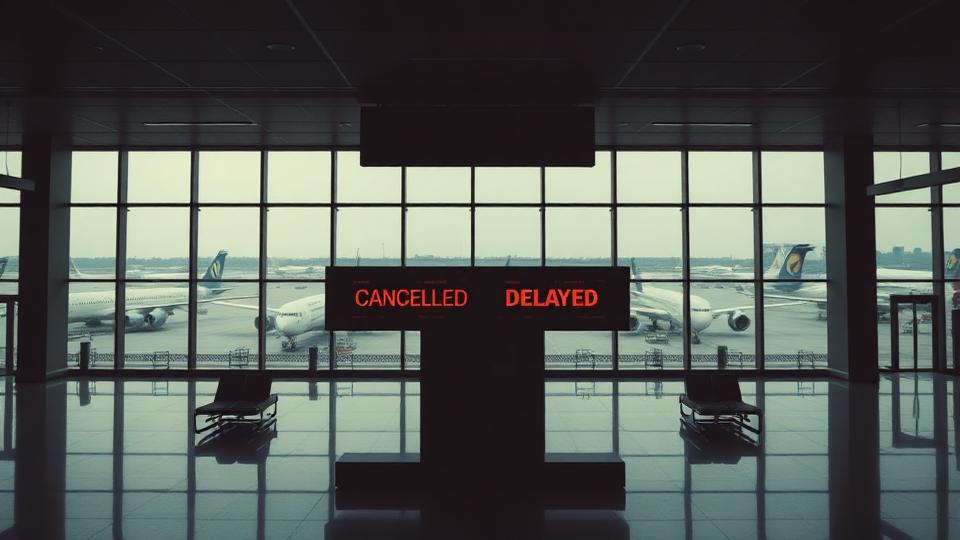
Geopolitical conflict doesn’t just disrupt shipping lanes - it closes airspace. For an island continent dependent on long-haul aviation, the consequences are immediate and commercially significant.
The Scale of Disruption
When conflict erupts, the effects cascade rapidly. The March 2026 Strait of Hormuz crisis saw airspace closures across Iran, Iraq, Kuwait, Israel, Bahrain, UAE, Syria and Qatar. Dubai, Abu Dhabi and Doha airports - the primary Middle East hubs - effectively shut down. Emirates, Qatar Airways and Etihad between them carried 44% of Australia-UK and 64% of Australia-Europe passenger capacity. All three grounded operations. On 3 March 2026 alone, there were 652 flight disruptions across Australia and New Zealand (587 delays, 65 cancellations), affecting approximately 13,000 passengers per day.
Qantas suspended its Perth-London nonstop service and rerouted via Singapore (adding 3+ hours). Virgin Australia’s Qatar-operated codeshares diverted or cancelled outright. Qantas shares fell over 10%.
Carrier Liability: The Montreal Convention Framework
For international flights to and from Australia, the Montreal Convention 1999, given domestic force through the Civil Aviation (Carriers’ Liability) Act 1959 (Cth), provides the exclusive liability framework. This means:
- Delay claims are capped at approximately 4,694 SDR (~A$10,800) per passenger under Article 19. Airlines can defend these claims by proving the disruption was caused by circumstances outside their control - conflict-zone airspace closures clearly qualify.
- Death or injury (as in MH17) triggers strict liability up to 128,821 SDR (~A$263,000), with unlimited liability above that threshold unless the carrier proves absence of negligence.
- The Montreal Convention operates in substitution for other civil liability - passengers cannot pursue common law negligence claims outside the Convention framework.
The critical question is whether the airline took all reasonable measures to prevent or mitigate the disruption. If competitor airlines managed to operate alternative routings while your airline did not, the “extraordinary circumstances” defence weakens.
Air Freight: Time-Sensitive Exports at Risk
The closure of Middle East air routes has an acute impact on Australian exports. Emirates, Etihad and Qatar Airways carry substantial belly-hold freight capacity; when they ground operations, Australian air freight capacity to Europe drops by approximately 18% immediately. Air freight premiums have spiked 30-40% for European destinations.
The consequences for time-sensitive Australian exports - rock lobster, abalone, fresh produce, pharmaceuticals and e-commerce goods - are severe. Longer transit times via alternative routes (Singapore, Hong Kong) can render perishable shipments commercially unviable.
Under IATA Resolution 600b (standard air waybill conditions), carriers may use alternative carriers, aircraft or modes of transport without notice. As discussed in Section 1, airline conditions of carriage universally define force majeure to include war, hostilities, sanctions and airspace closures. When triggered, carriers are exempt from liability for consequential losses, meaning the exporter, not the airline, absorbs the commercial loss.
The Montreal Convention caps cargo liability at 22 SDR per kilogram for lost, damaged or delayed cargo - a figure that bears no relationship to the value of premium Australian seafood or pharmaceutical products.
Practical Implication
Aviation disruption exposes a specific gap in Australia’s legal framework. The Montreal Convention caps delay compensation at modest levels. Carriers invoke force majeure to avoid freight liability. Unlike the US, where the FAA can issue temporary war risk policies when commercial cover is withdrawn, Australia has no government backstop for airline war risk insurance (see Section 4 for the full war risk insurance analysis). For the consumer protection and frustration claims arising from mass cancellations, the COVID class actions discussed in Section 2 demonstrate the scale of potential litigation, with over $500 million in combined claims currently before the courts.
11. Practical Takeaways
For Australian businesses and their advisers, the following steps are prudent regardless of whether conflict escalates:
- Review force majeure clauses in all material contracts. Are they specific enough? Do they cover sanctions, shipping disruption, government-imposed restrictions and armed conflict? Do they include proper notice and mitigation requirements?
- Audit insurance coverage. Understand your war exclusion clauses. Check whether your business interruption cover extends to contingent business interruption. Review marine insurance war risk provisions and cancellation terms. Consider trade disruption insurance.
- Conduct a sanctions compliance review. Map your supply chain for exposure to sanctioned jurisdictions and designated entities. Understand your exposure to US secondary sanctions, particularly if you transact in USD or through US-correspondent banks.
- Stress-test your supply chain. Identify critical single-source dependencies. Develop alternative supply arrangements. Consider buffer stock strategies.
- Review employment arrangements. Understand when stand-down provisions can and cannot be lawfully invoked. Ensure your HR team is familiar with Fair Work Act requirements. Have a contingency plan that does not bypass consultation obligations.
- Brief your board. Ensure directors understand the company’s geopolitical risk exposure and that board risk committees are actively considering these scenarios. Document the process.
- Assess aviation and freight exposure. If your business depends on air freight through Middle East hubs, develop alternative routing plans. If you are in the travel industry, understand your obligations under the ACL and Montreal Convention when flights are cancelled for reasons outside your control. The COVID class actions show the cost of getting this wrong.
- Monitor developments. Sanctions lists change frequently. Shipping lane risk assessments evolve daily. War risk premiums adjust in real time. Active monitoring is essential.
Conclusion
None of the above requires predicting conflict or making geopolitical forecasts. It requires recognising that Australian law is deeply affected by global events, and that the legal frameworks governing contracts, insurance, employment, corporate governance and trade are all activated when supply chains are disrupted - regardless of the cause.
COVID-19 demonstrated that businesses and lawyers who had prepared their contracts and understood the legal landscape before disruption hit were in a materially better position than those who had not. The same principle applies to geopolitical risk.
The question is not whether conflict will occur. The question is whether your contracts, insurance, compliance programs and governance frameworks are fit for purpose if it does.
This article is for general information purposes only and does not constitute legal advice. You should seek professional advice tailored to your specific circumstances before acting on any information in this article. Liability limited by a scheme approved under Professional Standards Legislation.